What Bellevue Is — and What It Isn't
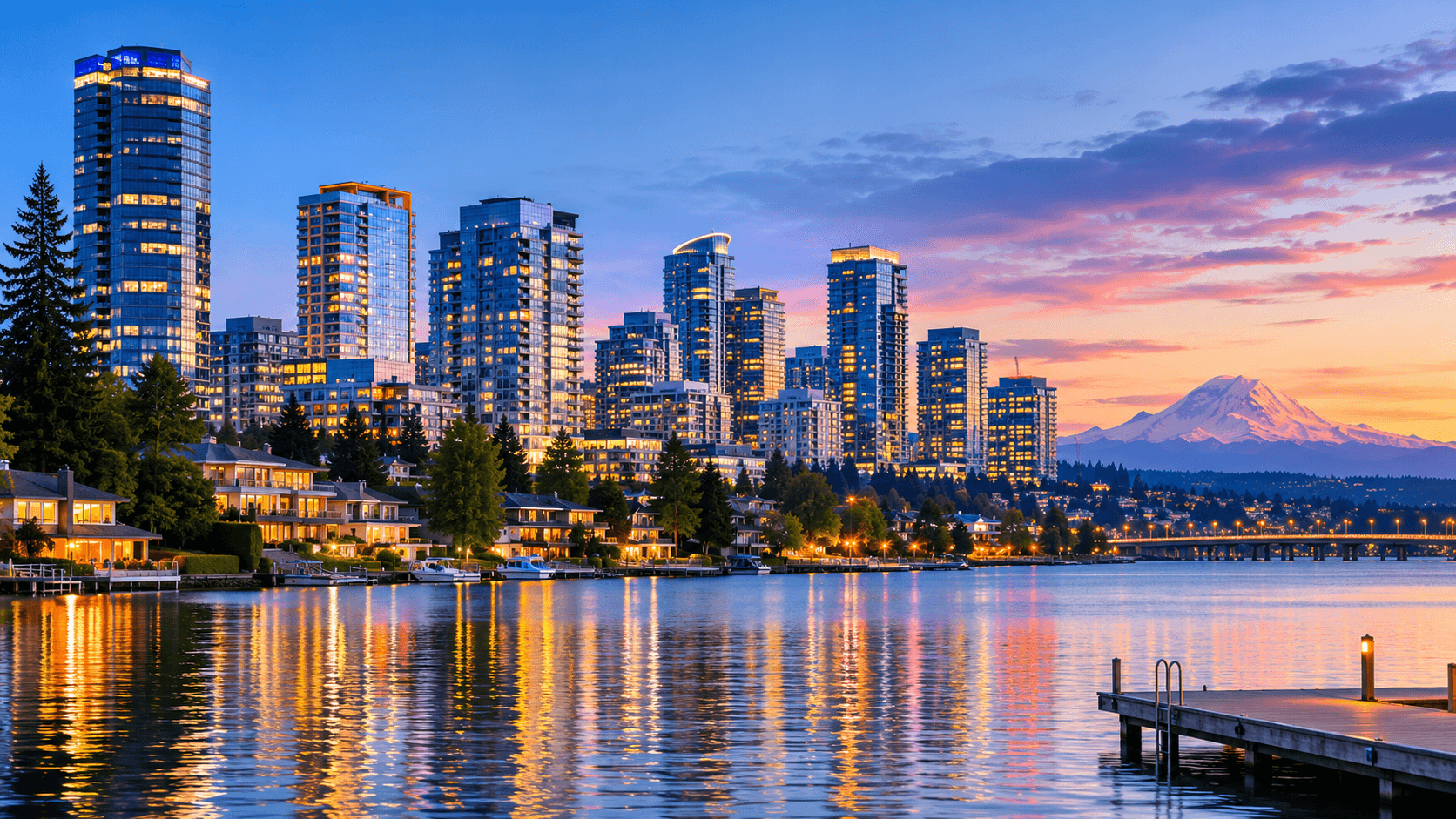
Bellevue is not a suburb. It was — for decades, it was defined in relation to Seattle, the city across the lake. That framing no longer fits. Bellevue in 2026 has its own skyline, its own downtown dining and retail scene, its own concentration of corporate headquarters, and an identity that does not depend on Seattle for context.
This matters for buyers because the mental model of Bellevue as a quieter, cheaper Seattle alternative has been replaced by something more accurate: Bellevue as a destination. Buyers who arrive expecting a tidy version of Seattle often find something more complex — and more compelling — than they anticipated.
Downtown Bellevue: A City Core in Its Own Right
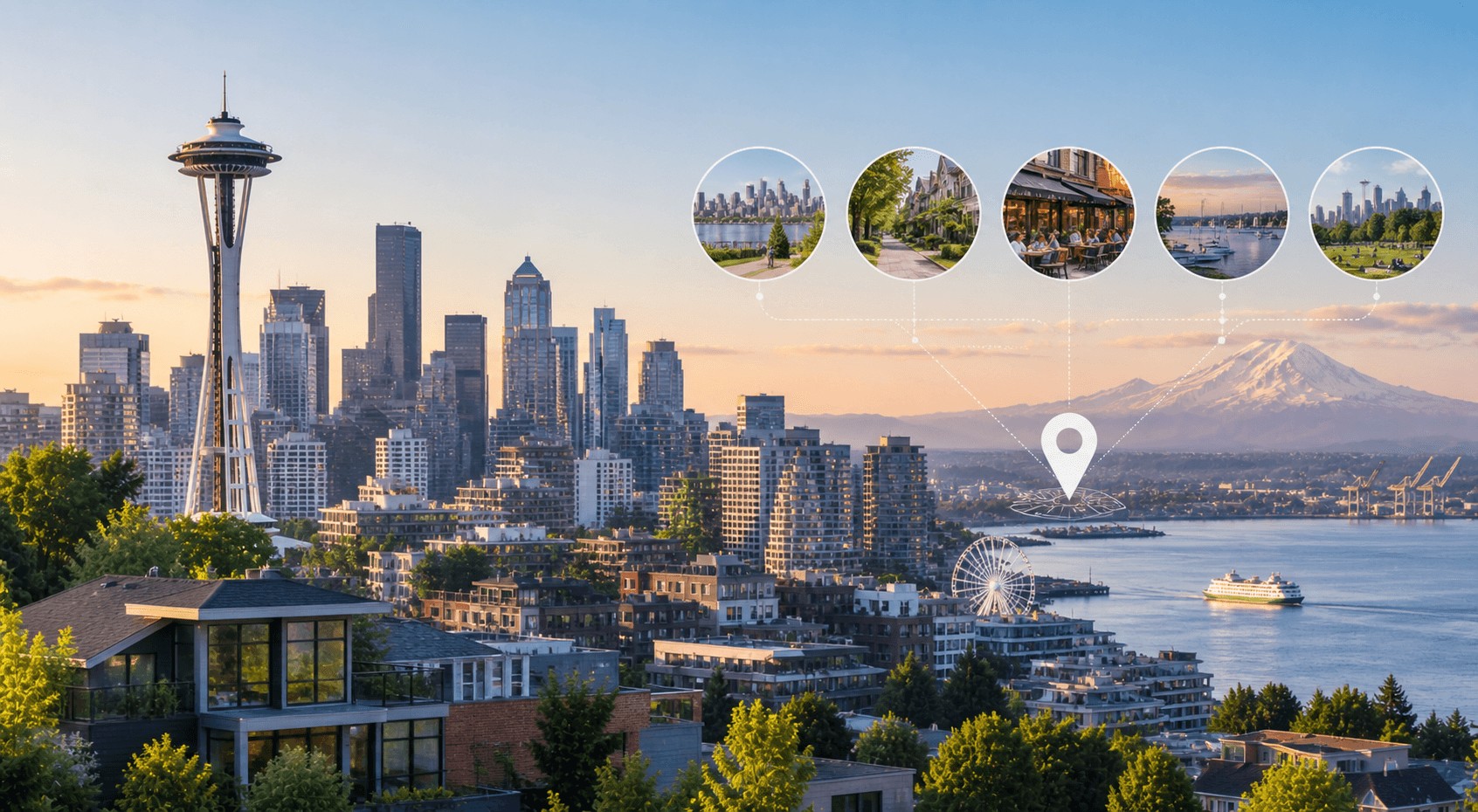
Downtown Bellevue has undergone dramatic transformation over the past decade. The Bellevue Collection — Bellevue Square, Lincoln Square, and Bellevue Place — represents one of the highest-concentration luxury retail environments in the Pacific Northwest. Restaurants, hotels, high-rise residential towers, and cultural venues have added density and energy that competes credibly with Seattle's urban core.
The arrival of East Link light rail with a downtown Bellevue station has connected the city directly to Seattle, Redmond, and points north — reinforcing its position as a genuine urban center rather than a car-dependent suburb. Buyers in downtown Bellevue condominiums now have transit options unavailable as recently as 2023.
Bellevue's Neighborhoods: A Guide Within the City
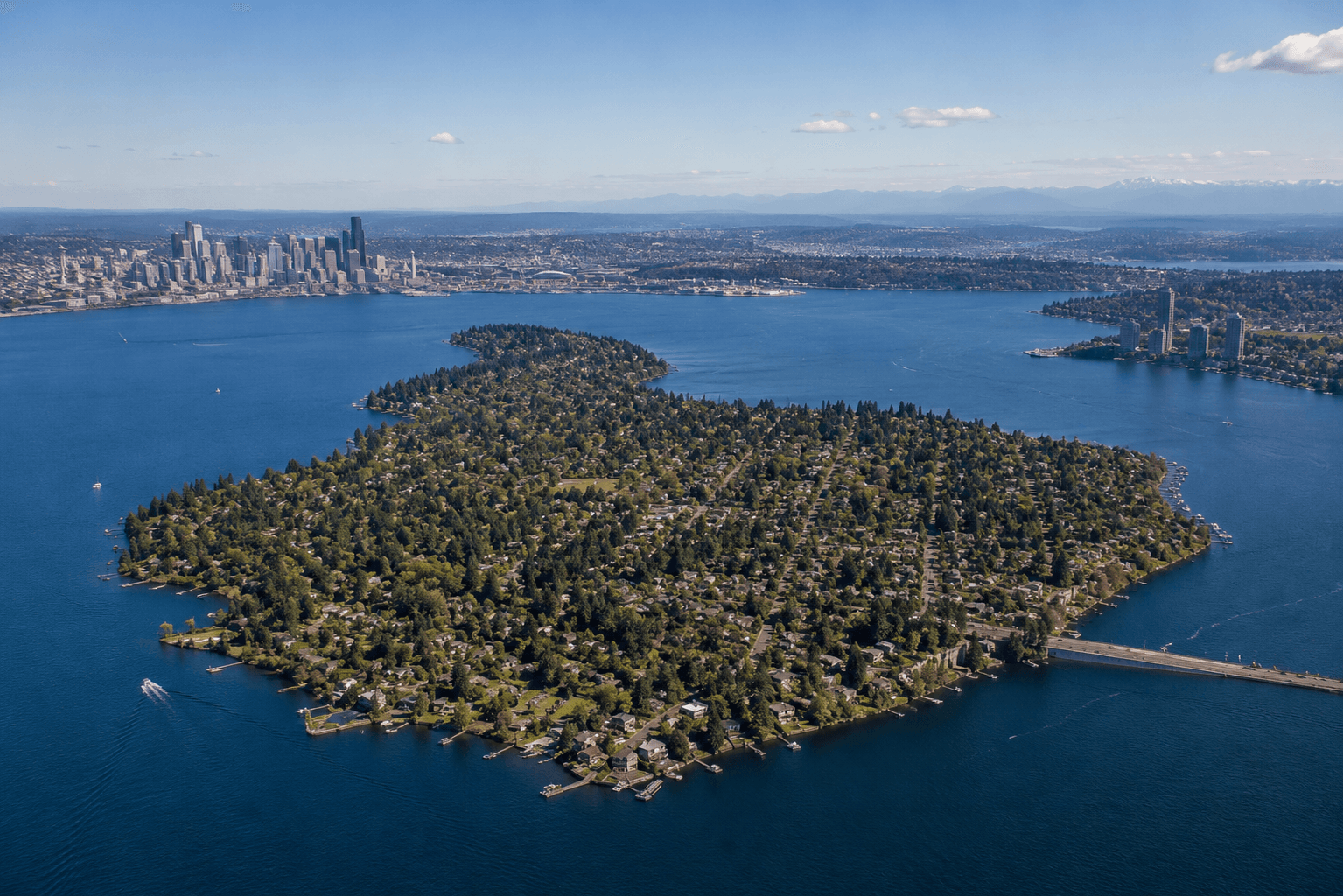
West Bellevue is the city's most established and most expensive residential area — a collection of neighborhoods between downtown and Lake Washington that includes Medina (technically its own city), Clyde Hill, Yarrow Point, and the lakefront Enatai neighborhood. These areas are defined by large lots, mature landscaping, lake access, and some of the highest residential prices in Washington State.
Bellevue's interior neighborhoods — Somerset, Newport Hills, Woodridge, and Factoria — offer more accessible price points with strong school district access. These areas attract families who want Bellevue's school district at a lower entry than West Bellevue commands. The Crossroads area in northeast Bellevue is the most diverse and culturally rich part of the city, with the most accessible price points within city limits and easy access to Microsoft's campus via SR-520.
Housing Stock and Architecture
Bellevue's residential housing stock skews newer than Seattle's, reflecting the city's post-war development pattern. Mid-century ranch homes from the 1950s and 1960s — many extensively renovated — sit alongside 1980s and 1990s construction, newer luxury custom homes, and an expanding supply of attached townhomes near the city core.
The West Bellevue lakefront is where the most architecturally significant homes concentrate: custom estates with private docks on Lake Washington, expansive view properties on Clyde Hill, and Medina's trophy residences that compete with Seattle's highest luxury tier. Architecture here trends deliberately contemporary, reflecting the wealth and aesthetic preferences of the tech-sector buyers who have defined this market for a decade.
High-rise condominiums are concentrated in and around downtown Bellevue, where several notable buildings have been developed in the past ten years. The condo market here has performed well — buoyed by proximity to tech employment and the arrival of light rail.
Bellevue School District: The Primary Value Driver
Bellevue School District is consistently ranked among the top public school districts in Washington State and competes nationally in academic performance. The district includes nationally recognized high schools — Bellevue, Interlake, and Newport — and benefits from strong community and corporate funding that supports programming at a level most districts cannot match.
The school district is the single most important driver of residential demand in Bellevue. Families relocating for tech-sector employment specifically target Bellevue for school access, and this demand is structural — driven by life stage rather than market speculation. It provides a floor to demand that makes Bellevue resilient in downturns in ways that markets without this anchor are not.
Pricing in 2026
Single-family homes in Bellevue's interior neighborhoods begin around $1.2 million for smaller, older homes and move into the $1.6 to $2.5 million range for renovated three- and four-bedroom homes in strong school catchments. West Bellevue and Clyde Hill begin around $3 million for entry positions and rise well past $10 million for lakefront and view estates. Medina's lakefront properties trade from $8 million to $30 million or more for the most exceptional examples.
Condominiums in downtown Bellevue range from $700,000 for one-bedroom units in newer buildings to $3 million or more for penthouse configurations with Cascade or Lake Washington views. The per-square-foot premium in downtown Bellevue's newest buildings reflects the walkability, transit access, and resort-level amenities that newer product commands.
Commute and Connectivity
Bellevue's commute dynamics are favorable for the Eastside's largest employer base. Microsoft's main Redmond campus is 10 to 15 minutes from most of Bellevue. Amazon's growing Bellevue presence — now one of the company's largest engineering hubs outside Seattle — is accessible within the city. Google, Meta, and other tech companies with Eastside offices are similarly proximate.
East Link light rail provides a 20-minute connection from downtown Bellevue to downtown Seattle — a significant improvement over the cross-lake drive at peak traffic. The line also connects Bellevue to Mercer Island, Redmond, and points north. For hybrid workers commuting to Seattle two or three days per week, light rail makes Bellevue a genuinely viable base.
Market Dynamics for Buyers and Sellers
Bellevue's single-family market in established neighborhoods operates with structurally low inventory. Well-priced homes — particularly those in top elementary school catchments or with significant recent renovation — generate competitive interest and move quickly. Days-on-market in Bellevue's most desirable pockets are among the lowest in King County for correctly priced inventory.
The luxury tier — West Bellevue, Clyde Hill, Medina — operates more deliberately. Buyer pools are smaller, due diligence timelines are longer, and transactions involve more sophisticated parties. But demand is consistent among its target buyers — tech wealth holders, executives, and family office clients — and the combination of school access, lake proximity, and privacy creates a value proposition difficult to find elsewhere.
Bellevue is no longer a footnote in Seattle's story — it is a destination with its own gravitational pull. For buyers who want school district certainty, newer housing stock, and proximity to the Eastside's dominant employer base, it is the most complete market in the Pacific Northwest.