The Core Difference: Urban Fabric vs. Suburban Quality
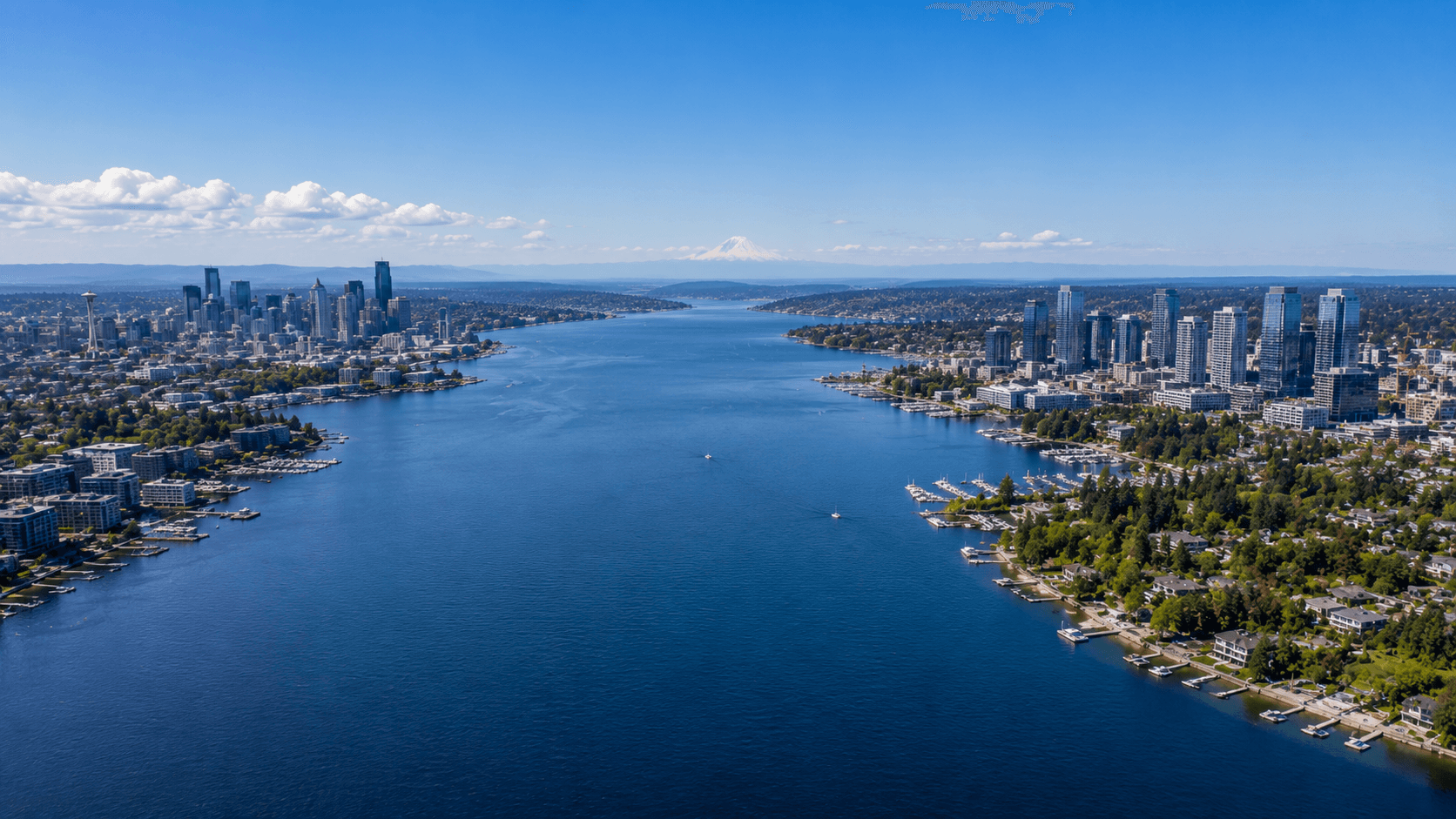
The simplest way to understand the divide: Seattle is a city with neighborhoods. The Eastside is a collection of cities with suburban density. That is not a criticism of either — it is a description of two genuinely different ways of organizing community life.
In Seattle, the neighborhood you choose defines your daily texture: the coffee shop two blocks away, the farmers market on Saturday, the restaurant you can reach on foot on a Tuesday night. In Bellevue or Kirkland, the car is assumed. The trade-off is that what you drive to tends to be newer, cleaner, and more purpose-built than what Seattle's older urban fabric provides.
Buyers relocating from San Francisco or New York often find Seattle's neighborhood character more familiar. Buyers from Phoenix, Dallas, or suburban Texas often find the Eastside more comfortable. Neither preference is wrong — they reflect different habits and different definitions of quality of life.
School Districts: Where the Eastside Pulls Ahead
For families with school-age children, the school district question is often the deciding factor — and on this dimension, the Eastside has a clear structural advantage. Bellevue School District and Mercer Island School District consistently rank among Washington State's top performers and compete nationally. Northshore School District (Bothell, Kenmore, Woodinville) is a strong performer at a more accessible price point. Issaquah and Lake Washington school districts are both well-regarded.
Seattle Public Schools is a single large district with wide variation by individual school and attendance area. Top-performing schools in neighborhoods like Laurelhurst, Bryant, and Wedgwood are excellent — but the system's size means that buyers must research individual attendance areas carefully rather than relying on a district-wide reputation. For buyers who want a strong district without the research burden, the Eastside offers more predictability.
Housing Stock and Price Comparison
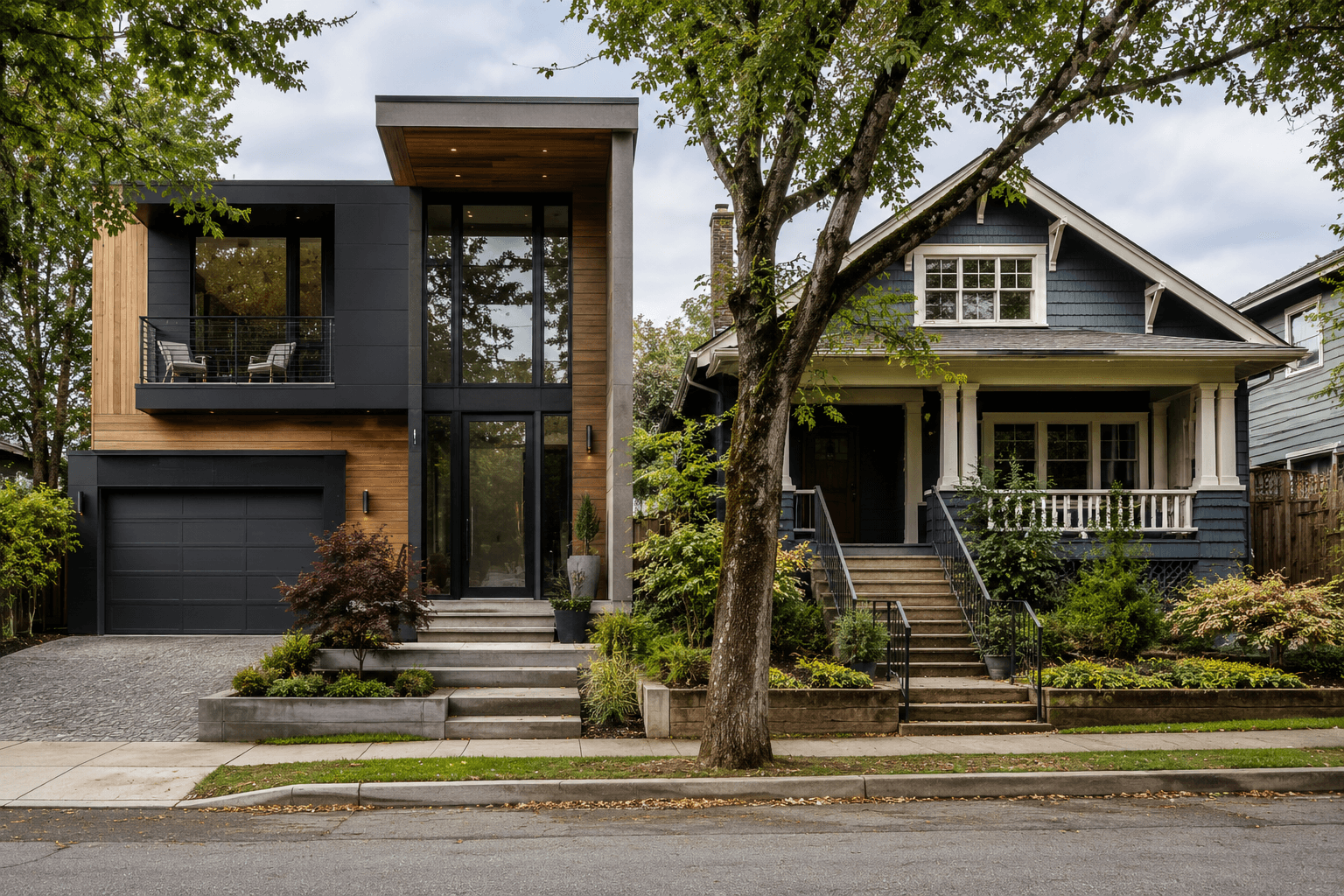
Seattle's housing stock skews older — craftsman bungalows, mid-century colonials, and pre-war architectural character define the city's most desirable neighborhoods. These homes carry irreplaceable details that new construction cannot replicate, and they sit on established lots with mature landscaping in neighborhoods that have decades of proven demand.
The Eastside's housing stock skews newer. Bellevue, Kirkland, and Redmond have seen significant development since the 1970s and 1980s, and newer construction from the 1990s through today is more prevalent. Modern open-plan layouts, updated systems, and energy-efficient construction are more common on the Eastside than in Seattle's older neighborhoods.
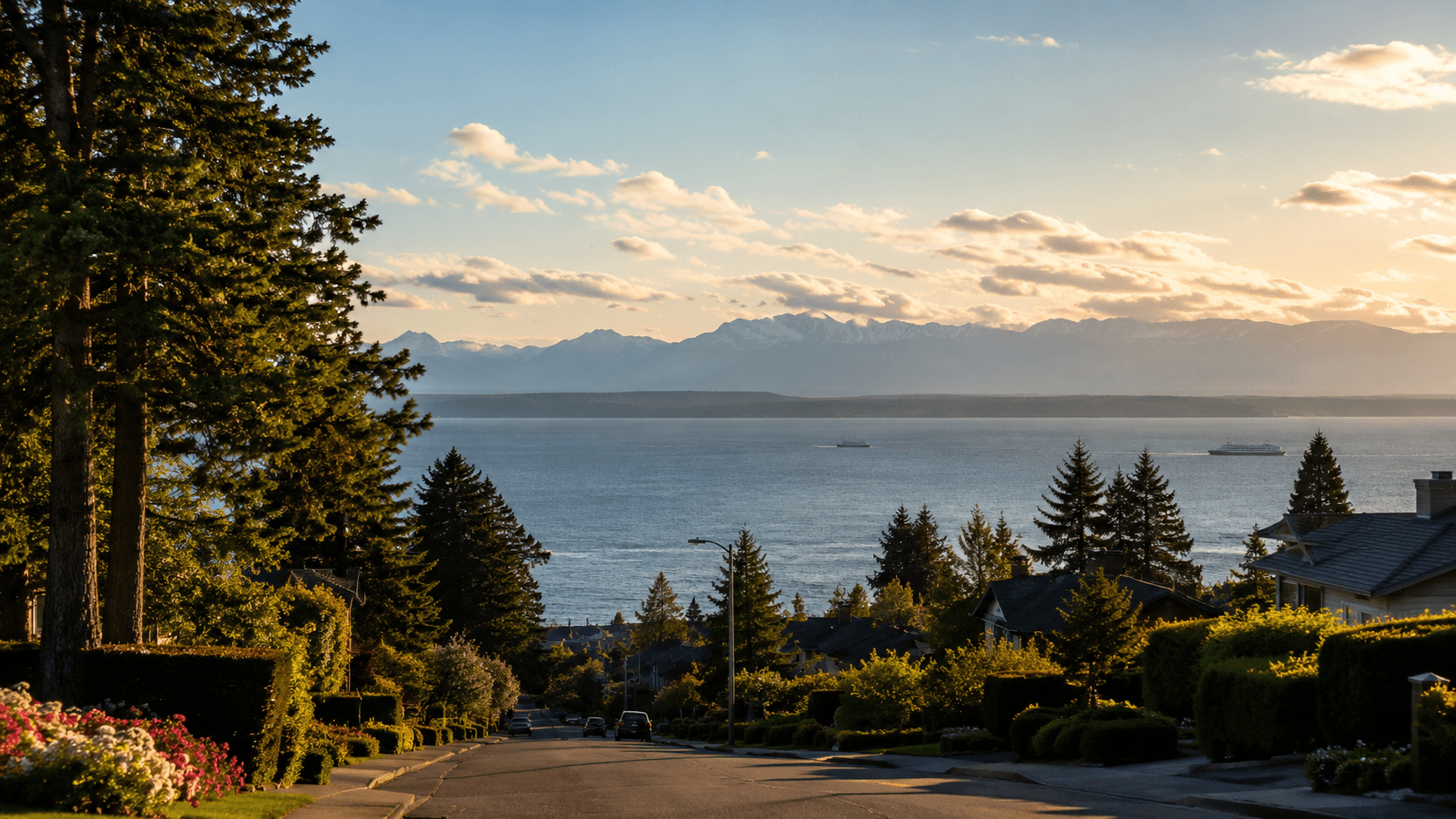
In 2026, comparable homes across the lake are priced at rough parity at entry and mid-market levels. The Eastside's premium school districts and newer stock make comparable square footage slightly more expensive in Bellevue and Mercer Island than in equivalent Seattle pockets. However, Seattle's luxury tier — particularly view properties in Magnolia, Queen Anne, and Madrona — competes directly with Bellevue's highest tier.
Commute: The Variable That Changes Everything
Where you work is often the most practical filter. Microsoft's main campus is in Redmond — 10 to 15 minutes from most of Bellevue and Kirkland, and 35 to 45 minutes from Seattle proper depending on traffic. Amazon's headquarters are in Seattle's South Lake Union, 10 minutes from Capitol Hill and 35-plus minutes from Bellevue. Google, Meta, and most of Seattle's biotech and startup employment concentrate in Seattle proper.
East Link light rail now connects downtown Bellevue and Redmond to downtown Seattle in approximately 20 minutes — reducing the commute burden for transit users and meaningfully changing the calculus for hybrid workers. Driving remains the dominant cross-lake commute mode, but the rail option has made the Eastside viable for more Seattle-employed buyers than before.
Remote workers and hybrid employees have the most flexibility — and many have chosen neighborhoods on lifestyle merit alone, without commute shaping the decision. For this group, the lifestyle question becomes the only question.
Lifestyle Priorities That Should Drive the Decision
Choose Seattle if you prioritize walkability, restaurant and cultural proximity, the texture of an established urban neighborhood, and architectural character that cannot be replicated. Capitol Hill, Ballard, Queen Anne, Madrona, and Magnolia each offer specific versions of this lifestyle at different price points.
Choose the Eastside if you prioritize newer homes, school districts with less individual research burden, quieter residential streets, and proximity to the Cascades and the Eastside's extensive trail network. Bellevue, Kirkland, and Sammamish offer this with access to Lake Sammamish and outdoor recreation that is closer and more accessible than it is from Seattle's western neighborhoods.
Mercer Island occupies a unique position between both worlds — a self-contained island community with an exceptional school district, Lake Washington access on all sides, and an I-90 corridor that puts both Seattle and Bellevue within 15 minutes. For buyers who want the benefits of both sides, Mercer Island is the answer — at a price that reflects it.
Long-Term Value: Which Market Performs Better?
Both sides of the lake have produced strong long-term appreciation. Seattle's established neighborhoods — particularly those with irreplaceable view positions, walkability, and architectural character — have historically held value through corrections and amplified gains during upswings. Magnolia, Queen Anne, and Madrona are examples of neighborhoods with structural scarcity that supports durable pricing.
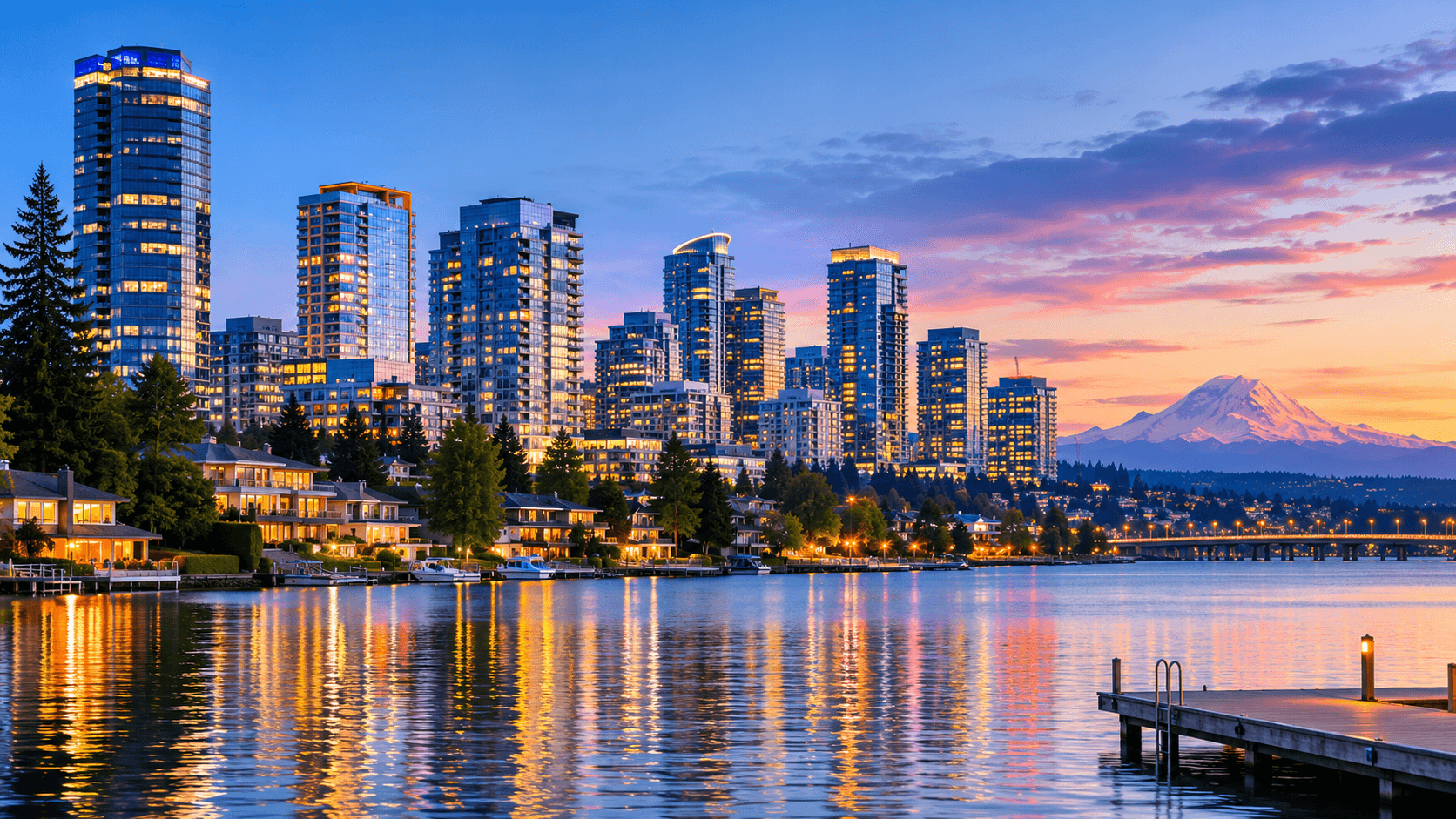
The Eastside has benefited from Microsoft and Amazon's sustained growth and the economic concentration of the tech sector. Bellevue in particular has seen dramatic appreciation as it has evolved from a suburban satellite into a genuine urban center. The opening of East Link light rail has accelerated this trajectory and opened new value in transit-adjacent neighborhoods.
Long-term performance correlates more with specific neighborhood quality and property positioning than with which side of the lake a home is on. Both markets reward buyers who buy correctly in the right location — and both will disappoint buyers who overpay for the wrong one.
Who Tends to Choose Each Side
Seattle tends to attract buyers relocating from urban East Coast or Bay Area environments, buyers without school-age children, buyers who prioritize walkability and cultural access, creative and startup-employed buyers, and buyers drawn to Seattle's architectural heritage.
The Eastside tends to attract families with school-age children, buyers relocating from suburban environments who prefer that lifestyle pattern, tech-employed buyers who work on the Eastside, buyers who want newer construction per dollar, and buyers seeking community-specific anchors like Mercer Island's school district or Kirkland's lakefront village character.
The lake is not a barrier — it is a dividing line between two genuinely different approaches to Pacific Northwest living. Understanding which one matches your life is the single most important decision in a Seattle-area home search.